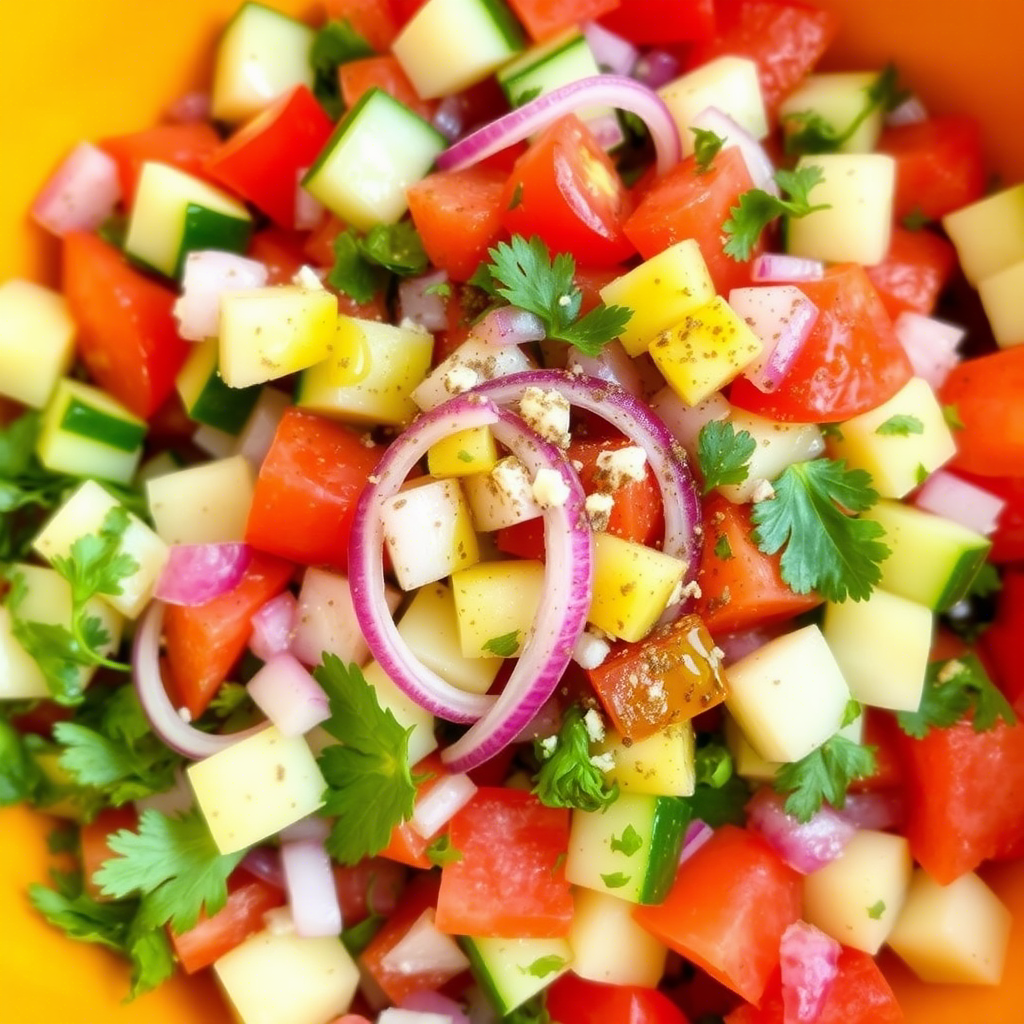
Assembling the Salad
- Combine vegetables: In a large mixing bowl, gently combine all the diced vegetables and chopped herbs.
- Add dressing gradually: Drizzle about two-thirds of the dressing over the vegetables and toss gently with your hands or two large spoons. Add more dressing as needed—the vegetables should be lightly coated but not swimming in dressing.
- Final seasoning: Taste and adjust salt, pepper, or lemon juice as needed.
- Rest briefly: Allow the salad to rest for 5-10 minutes before serving to let the flavors meld. Don’t let it sit too long, though, or the vegetables will begin to release water and become less crisp.
Serving and Presentation
Traditional serving: In Middle Eastern homes, this salad is typically served in a shallow, wide bowl so diners can see the vibrant colors and easily serve themselves.
Modern presentation: For a contemporary look, serve in individual portions using ring molds to create a neat stack, or in small glass bowls to showcase the vivid colors.
Garnish options:
- A light sprinkle of additional sumac for color and tang
- A few whole mint leaves
- A drizzle of high-quality olive oil
- A pinch of flaky sea salt
Variations and Regional Adaptations
While remaining true to the essence of Middle Eastern chopped salad, these regional variations offer delightful alternatives:
Lebanese-style: Add 1/4 cup finely chopped fresh mint and increase the lemon juice slightly. Sometimes includes a pinch of cinnamon.
Palestinian-style: Often includes 1 tablespoon of finely chopped fresh dill and may incorporate chopped romaine lettuce.
Jordanian-style: Frequently includes chopped green pepper instead of red and may add a pinch of allspice.
Turkish variation: Called “çoban salatası” (shepherd’s salad), this version often includes feta cheese and sometimes olives.
Israeli-style: Commonly includes finely diced kohlrabi and sometimes grated carrot.
Persian twist: Add 2 tablespoons of pomegranate molasses to the dressing for a sweet-tart flavor and garnish with pomegranate seeds when in season.
Make-Ahead and Storage Tips
Middle Eastern chopped salad is ideally made fresh, but with a few adjustments, you can prepare components ahead:
Partial preparation: Dice harder vegetables like bell peppers and onions up to 24 hours ahead. Store them separately in airtight containers in the refrigerator.
Herbs: Wash and dry herbs up to 3 days ahead, but chop them just before serving for maximum freshness and aroma.
Dressing: Can be made up to 3 days ahead and stored in a jar in the refrigerator. Bring to room temperature and shake well before using.
Complete salad: Dressed salad will keep for about 6 hours in the refrigerator, though the vegetables will soften and release some liquid. For best results, drain excess liquid before serving leftover salad.
Nutrition and Health Benefits
Middle Eastern chopped salad isn’t just delicious—it’s exceptionally nutritious:
Low in calories: A generous serving contains approximately 100-150 calories, making it a satisfying but light option.
High in fiber: The raw vegetables provide ample dietary fiber for digestive health.
Rich in vitamins: Provides significant amounts of vitamins A, C, K, and folate from the fresh vegetables and herbs.
Heart-healthy fats: The olive oil dressing contributes heart-protective monounsaturated fats.
Antioxidant-rich: The combination of colorful vegetables, herbs, and olive oil delivers a powerful dose of various antioxidants.
Hydrating: With water-rich vegetables like cucumber and tomato, this salad contributes to daily hydration needs.
Pairing Suggestions
This versatile salad complements a wide range of Middle Eastern and Mediterranean dishes:
Protein pairings: Serve alongside grilled chicken, lamb kebabs, or fish for a complete meal. For vegetarian options, pair with falafel, hummus, or lentil dishes.
Bread accompaniments: Offer warm pita bread, lavash, or taboon bread for scooping up the salad.
Complete mezze spread: Include as part of a mezze table with baba ganoush, hummus, labneh, tabbouleh, and stuffed grape leaves.
Grain companions: Serve over or alongside warm bulgur, freekeh, or couscous for a more substantial offering.
Sandwich enhancer: Use as a filling or topping for pita sandwiches, wraps, or sabich (Israeli eggplant sandwich).
Troubleshooting Common Issues
Watery salad: If your salad becomes too watery, drain excess liquid before serving. In the future, ensure tomatoes are well-drained and consider salting and draining cucumber pieces for 15 minutes before adding them to the salad.
Bitter taste: This usually comes from cucumber skin (if using regular instead of English cucumbers) or bell pepper seeds. Make sure to peel regular cucumbers and thoroughly remove seeds from peppers.
Too strong onion flavor: Soaking diced onions in cold water for 10-15 minutes before adding them to the salad will significantly reduce their sharpness while maintaining their crisp texture.
Herbs turning black: This happens when herbs are cut with a dull knife or chopped too far in advance. Always use a sharp knife and chop herbs just before serving.
Frequently Asked Questions
Q: Can I use a food processor to chop the vegetables? A: While technically possible, hand-chopping is strongly preferred for the best texture. Food processors tend to release too much liquid from the vegetables and create an uneven dice. If time is limited, a manual vegetable chopper can be a reasonable compromise.
Q: Is Middle Eastern chopped salad the same as tabbouleh? A: No, though they share some ingredients. Tabbouleh is primarily an herb salad with parsley and mint as the main ingredients, includes bulgur wheat, and has less tomato and cucumber. Middle Eastern chopped salad is primarily vegetables with herbs as an accent.
Q: Can I make this salad without tomatoes? A: While tomatoes are traditional, a variation can be made with additional bell peppers, radishes, and perhaps diced jicama for juiciness. The flavor profile will be different but still refreshing.
Q: How fine should I chop the vegetables? A: Aim for pieces about 1/4 inch in size—small enough to allow flavors to meld but not so small that the vegetables lose their texture. Consistency in size is more important than exact dimensions.
Q: Is sumac essential for authentic flavor? A: While not absolutely required, sumac adds a distinctive tangy flavor that’s difficult to replicate. If unavailable, use additional lemon zest or a very small pinch of citric acid.
Why This Recipe Works
This Middle Eastern chopped salad recipe succeeds for several key reasons:
Technique matters: The uniform, fine dice ensures that every bite contains a balance of flavors and allows the dressing to coat each piece effectively.
Simplicity shines: By letting high-quality ingredients speak for themselves without complicated preparations or heavy dressings, the natural flavors become the star.
Balanced flavors: The brightness of lemon, peppery notes from herbs, sweetness from ripe vegetables, and richness from olive oil create a perfectly harmonious taste experience.
Cultural authenticity: This recipe respects the traditional methods and flavor profiles that have made this salad beloved across the Middle East for generations.
Versatility: The salad can be adapted to seasonal produce availability and personal taste preferences while maintaining its essential character.
Cultural Context and Serving Traditions
In Middle Eastern culture, this salad represents more than just a side dish—it’s an embodiment of the region’s approach to food. Fresh, seasonal ingredients prepared simply but with care reflect both practicality and a deep appreciation for natural flavors.
Traditionally, meals are served with multiple small dishes placed in the center of the table for everyone to share. This style of eating, called “mezze,” encourages conversation and connection. The chopped salad typically occupies a place of honor in this spread, often served in a wide, shallow bowl to showcase its vibrant colors and make it accessible to everyone at the table.
In many households across the region, preparing this salad is a daily ritual and often one of the first dishes children learn to make. The techniques—selecting ripe produce, chopping uniformly, balancing flavors—are passed down through generations, with each family developing their own slight variations that become part of their culinary identity.
Conclusion
The Middle Eastern chopped salad embodies the beauty of simplicity in cooking. With just a handful of fresh ingredients and minimal preparation, you can create a dish that’s simultaneously refreshing, nutritious, and bursting with flavor. Whether served as part of an elaborate mezze spread, alongside grilled meats, or simply with a piece of warm flatbread, this vibrant salad brings the sunshine and hospitality of the Middle East to your table.
What makes this dish truly special is its ability to highlight the natural flavors of peak-season produce. When tomatoes are at their sweetest and cucumbers at their crispest, this simple preparation allows their qualities to shine while the bright dressing and aromatic herbs elevate the entire experience.
As you master this fundamental recipe, you’ll likely develop your own variation, perhaps adjusting the herb balance or introducing a new vegetable. This personalization is completely in keeping with the tradition of this beloved regional dish, which has evolved through countless family kitchens while maintaining its essential character.
So the next time you need a refreshing side dish or want to experience a taste of Middle Eastern culinary tradition, reach for this chopped salad recipe. It’s a timeless classic that proves extraordinary flavor can come from ordinary ingredients when prepared with care and respect.
Keywords: Middle Eastern chopped salad, Israeli salad recipe, Arabic salad, Levantine cuisine, fresh vegetable salad, sumac salad recipe, healthy Mediterranean recipe, chopped cucumber tomato salad, Middle Eastern mezze recipe, authentic Levantine salad